
Many people communicate in ways other than speech. Some use signs or gestures. Some point to pictures, or use a communication book. Others use a tablet or a speech device that says words out loud when they press a button. All of these are AAC, which stands for augmentative and alternative communication.
Music therapy sessions are a great place to use AAC, because songs are full of natural reasons to communicate: choosing what to play next, asking for more, saying stop and go, and joining in.
What counts as AAC
AAC is any way of communicating that adds to or replaces speech. It usually falls into two groups:
- No-tech: signs, gestures, facial expressions, pointing and body language.
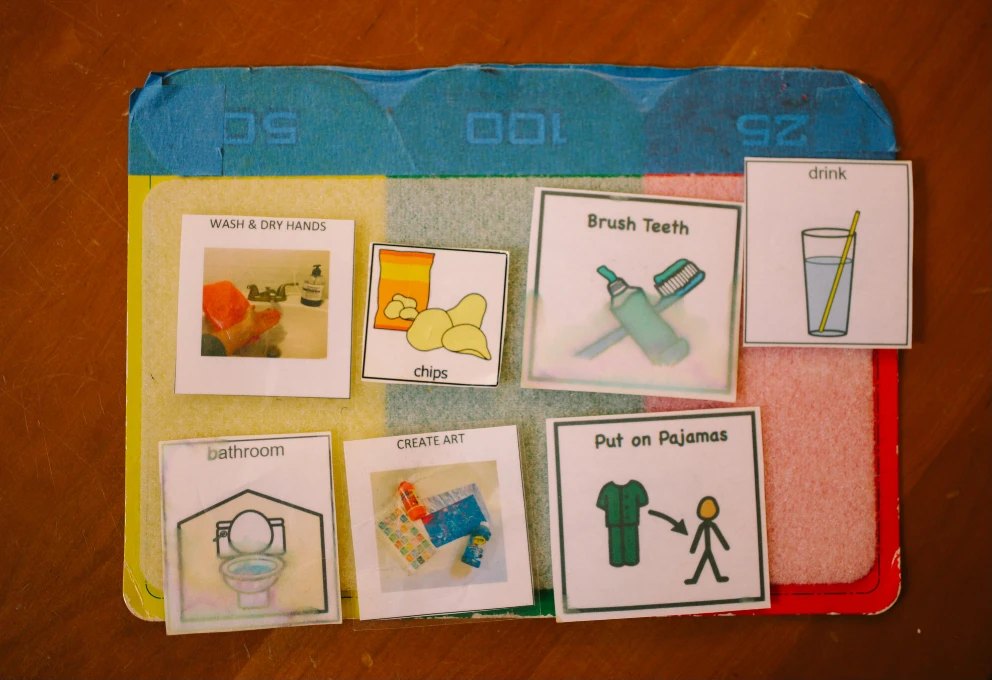
- Aided: anything the person uses alongside their body. That includes low-tech options like picture cards, choice boards and communication books (such as PODD), and high-tech options like speech-generating devices and apps (such as Proloquo2Go or LAMP).
There’s no single right system. The best one is the one that works for the person and gets used.
How AAC fits into a music therapy session
Here are some of the ways it can look in a session:
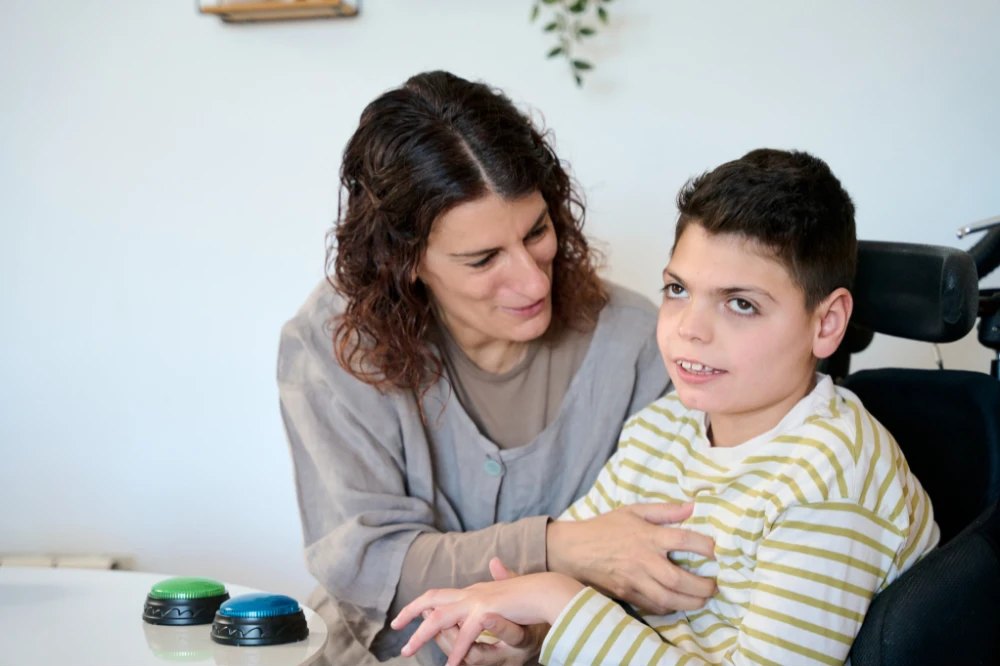
- Choosing songs and instruments. A choice board or a page on someone’s device lets them pick the song, the instrument, or who plays next. Making real choices that change what happens is one of the most motivating parts of a session.
- Core words in songs. Words like “more”, “stop”, “go”, “again”, “loud” and “quiet” come up over and over in music. We build songs and games around them, so there are lots of chances to use them for a real reason.
- Filling the gap. We might pause before a word in a familiar song and wait. The person can fill the gap with their device, a sign, a sound or a look.
- Singing a line. A short phrase from a favourite song can be saved on a device button, so the person can “sing” their line when it comes around.
- Modelling. We use the person’s own system as we talk and sing, pointing to or pressing the words as we say them. Seeing their system used by others helps people learn it, without any pressure to get it right.
Good to know
Bring your device
If you or your child use AAC, please bring it to sessions, and let us know how it’s set up. We work with the system you already use rather than introducing something new, so the skills carry over to the rest of your day.
Working with your speech pathologist
Music therapy doesn’t replace speech pathology. If you have a speech pathologist, we’re happy to work with them, share goals and use the same words and pages they’re focusing on. If you’re thinking about getting a communication device, a speech pathologist is the right person to assess what will suit.
Keep it going at home
Songs are easy to repeat at home. A favourite song with a “more” or “stop” game built in, or a simple choice between two songs, gives everyone more chances to communicate during the week. We can suggest songs and ideas that match what we’re working on in sessions.
Want to talk it through? If you’d like to know whether music therapy could support communication for you or someone you care for, book a free cuppa at our clinic in Shortland, or get in touch.