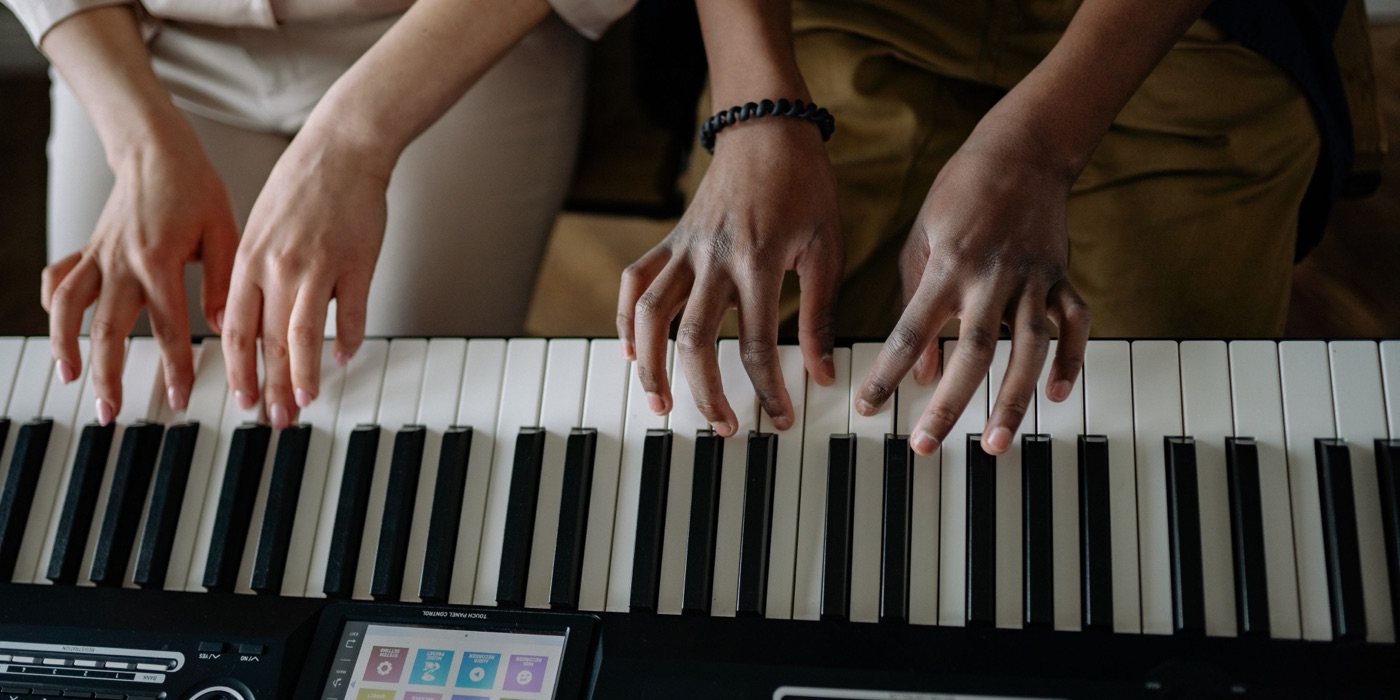
From the outside, a music therapy session and a music lesson can look a lot alike. Someone is at the piano, or singing, or tapping out a rhythm on a drum. So it’s a fair question: what’s actually different?
The short answer is the goal. In a music lesson, getting better at music is the goal. In music therapy, music is the tool, and the goal is something else in your life.
What music therapy is for
The Australian Music Therapy Association describes music therapy as the intentional use of music by a Registered Music Therapist to support people to improve their health, functioning and wellbeing.
In practice, that means goals like:
- communicating more, whether that’s with words, signs, a device or turn-taking on a drum
- managing big feelings and finding ways to calm down
- building movement and coordination
- feeling confident and connected with other people
The music is chosen and shaped because it helps with that goal. A child working on communication might write a song with their therapist about their favourite things. An adult working on fine motor skills might learn a few chords on the ukulele. They are making real music, but the progress we track is the communication or the movement, not the song.
What music lessons are for
Lessons are about musical skill: reading music, technique, learning pieces, preparing for exams or performances. A good teacher makes this fun and encouraging, and lessons can bring a lot of joy and confidence. But the measure of success is musical: can you play the piece, hit the note, keep the beat.
Side by side
| Music therapy | Music lessons | |
|---|---|---|
| The goal | Health, functioning and wellbeing | Musical skill |
| Who runs it | A Registered Music Therapist | A music teacher |
| Musical experience needed | None | Depends on the level |
| How progress is measured | Against your personal goals | Against musical milestones |
| NDIS funding | Can be funded as therapy | Generally not funded as therapy |
Who can call themselves a music therapist
A Registered Music Therapist (RMT) has completed an accredited university degree in music therapy, is registered with the Australian Music Therapy Association, and keeps up ongoing professional development to stay registered. That training covers both music and health: things like disability, development, mental health and how to set and measure therapy goals.
Plenty of music teachers are wonderful with people of all abilities, and that matters. It’s just a different job with different training.
What about NDIS funding?
Music therapy can be funded by the NDIS when it’s delivered by a Registered Music Therapist and it’s a reasonable and necessary support linked to your plan goals. Music lessons, on their own, generally aren’t treated as therapy. Our NDIS & funding page explains how it works, which part of a plan it comes from, and how plan management fits in.
Can you do both?
Yes, and they often complement each other. Some people start in music therapy and, once they’ve built confidence, move into lessons or a community group like our choir, With One Voice Newcastle, or Polyphonic for young people. Others have lessons for the joy of playing and therapy for a specific goal. If you’d like to give learning a go at home, our free ebooks are a good place to start.
Not sure which is right?
If you’re weighing up music therapy for yourself, your child or someone you support, the easiest way to find out is to talk it through. Book a free cuppa at our studio in Shortland, or get in touch and we’ll help you work out the best next step.