How music therapy can help

Music therapy is an evidence-based allied health profession that supports people of all ages and abilities1,2. Here’s how it can help people with a range of conditions and needs.

For each one, you’ll find:

  • what music therapy can support
  • what a music therapy session might look like
  • what the research says, with references

Learn about

Tap any of these to see how music therapy can help.

Autism

Music is predictable and repetitive, and it can be shared without words. For many people with autism, that makes it a comfortable way to practise connecting with others.

Music therapy can support

  • social interaction, like taking turns, sharing attention and doing things together
  • communication, with or without speech (including AAC)
  • emotional regulation and coping with change
  • daily routines and transitions

In a music therapy session

We might play a call-and-response drum game, write a song about a tricky part of the day (like arriving at preschool), or use a favourite song to practise waiting, choosing and asking for “more”.

What the research says

A 2022 Cochrane review of 26 studies found that music therapy probably increases the chance of overall improvement for people with autism, and may improve quality of life. Its effect on specific social and communication skills was less certain3. In a trial with 51 children aged 6 to 12, social communication improved after music therapy4. In a small study, songs about the morning routine helped young children with autism get through it more independently5.
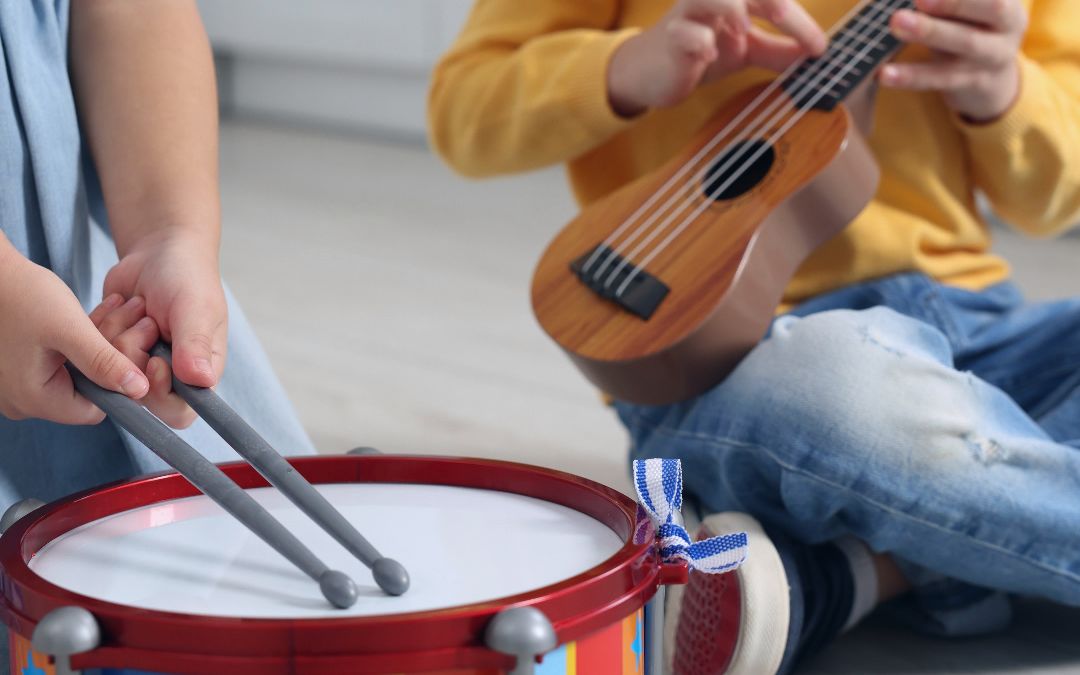
Two children on the floor playing a drum and a ukulele together

ADHD

Music has a steady beat, a clear start and finish, and always something to do. That structure can help children and adults with ADHD focus and stay involved.

Music therapy can support

  • attention and focus
  • impulse control, like waiting for a turn or stopping on cue
  • managing big feelings
  • getting along with others in a group

In a music therapy session

We might play rhythm games where the music stops and starts without warning, learn drum patterns that get harder step by step, or write a song that helps you remember the steps of a routine.

What the research says

Research on music therapy for ADHD is still early. A 2023 systematic review found studies reporting benefits for attention, impulsivity and social skills, but most of the studies were small6. In a pilot study with nine young people with neurodevelopmental delays, a music-based attention program improved their ability to focus and to switch attention7.

Close-up of hands playing djembe drums

Developmental delay

Young children learn through play, repetition and relationships, and music offers all three. Music therapy can work on several areas of development at once, in a way that feels like play.

Music therapy can support

  • listening and attention
  • early communication: sounds, gestures and first words
  • movement, like reaching, grasping and walking to a beat
  • playing alongside and with other children
  • connection between parent and child

In a music therapy session

We might sing songs with actions and pauses to fill, shake, tap and pass instruments back and forth, and share ideas for families to use at home during the week. Read more about early childhood music therapy.

What the research says

Most studies in this area are small. A systematic review of 71 studies found music-based interventions improved responding, starting communication, turn-taking, shared attention and group participation for people with communication disorders, including developmental disabilities8. A pilot study found a music-based attention program improved attention skills in young people with neurodevelopmental delays7.

A child's hands playing a wooden xylophone with mallets, seen from above

Speech and language delay

Singing slows speech down, stretches sounds out and repeats words, which makes them easier to hear, copy and remember.

Music therapy can support

  • understanding words and instructions
  • making sounds and saying first words
  • clearer speech
  • using words, signs or AAC to ask for things and make choices
  • breath control and voice

In a music therapy session

We might sing songs with a gap for your child to fill, clap out the syllables in words, pair songs with picture cards, or choose songs using signs or a communication device.

What the research says

A systematic review of 19 studies found music supported early communication, understanding and speech in young children with autism9. A review of music-based treatment for childhood speech sound disorders found positive results in seven of eight studies, although the studies weren’t high quality10. Music therapy doesn’t replace speech pathology. We’re happy to work with your speech pathologist and focus on the same goals.

A child's hand holding a toy microphone beside a piano

Down syndrome

Music gives children with Down syndrome a fun, repetitive way to practise speech, movement and social skills. It often works well alongside speech pathology and physiotherapy.

Music therapy can support

  • speech sounds and vocabulary
  • listening and attention
  • fine and gross motor skills
  • social skills and confidence

In a music therapy session

We might use action songs to build movement and coordination, sing with picture cards to learn new words, play rhythm games to practise the first sounds of words, and make music in a group with peers.

What the research says

A systematic review of 19 studies found music had positive effects on social-emotional, motor, cognitive and communication development in children with Down syndrome, though many of the studies didn’t describe their methods in detail11. AMTA’s evidence summary describes a six-year-old who, after three months of weekly music therapy, was using new sounds, more words and two-word phrases2.

Small hands on piano keys, seen from above

Cerebral palsy

Rhythm gives the brain a beat to plan and time movement against. Music therapists use this to make movement practice smoother and more motivating.

Music therapy can support

  • arm and hand movement, reach and grip
  • walking and balance
  • breath and voice
  • communication, including AAC and switches
  • joining in and having fun with others

In a music therapy session

We might set up drums and chimes to reach for, move in time to a steady beat, use adapted instruments or switches, and sing to work on breath and voice.

What the research says

A 2022 review of eight trials found limited evidence that music therapy improves gross motor function and everyday activities for people with cerebral palsy. The authors said larger studies are needed12. In a small case study of children with hemiplegic cerebral palsy, practising arm movements to a metronome beat improved their movement, and the gains were still there months later13.

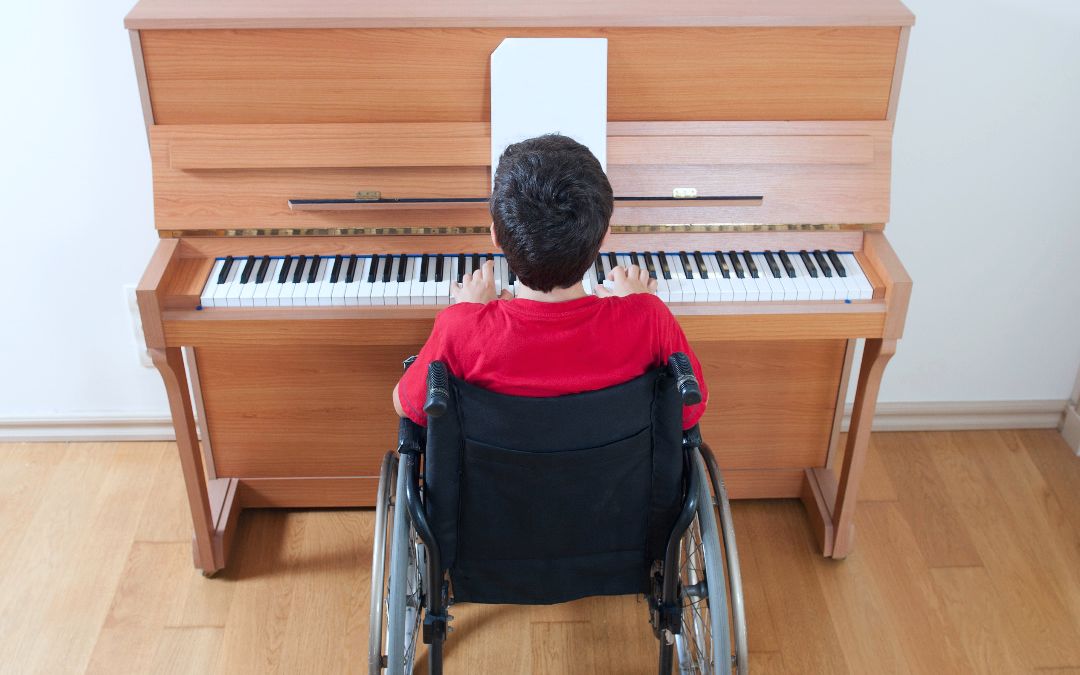
A child in a wheelchair playing an upright piano, seen from behind

Intellectual disability

You don’t need to read, write or speak to take part in music. People with intellectual disability can join in, make choices and succeed from the very first session.

Music therapy can support

  • communication and making choices
  • social skills and friendships
  • confidence and self-expression
  • fitness and movement
  • independence and community participation

In a music therapy session

Sessions can be one-on-one or in a group. We might play in a band, write songs about your own life, record in our studio, or dance.

What the research says

In a long-term music therapy group, young adults with severe learning disabilities formed friendships with each other14. A dance and exercise program set to music improved fitness and strength in adults with intellectual disability15. An Australian study of online music therapy groups found NDIS participants valued them for connection and for practising social communication16.

Adults' hands playing djembes in a drum circle

Anxiety

Music can affect breathing, heart rate and mood1. In music therapy, we use it to help people notice how they feel, calm their body and find ways to express what’s going on.

Music therapy can support

  • ways to calm down and relax
  • expressing feelings that are hard to talk about
  • confidence and self-esteem
  • coping with change, new places and appointments

In a music therapy session

We might make a calming playlist together, write a song about worries, drum to let off tension, or practise slow breathing with a guitar or ocean drum.

What the research says

A 2021 meta-analysis of 32 randomised controlled trials found music therapy significantly reduced anxiety during treatment. More research is needed on how long the effect lasts17. For children and teenagers there are fewer studies, and they are smaller, but the results are promising18. An eight-week music program for teenagers and young adults with autism reduced anxiety and improved self-esteem19. Music therapy can be part of your support, but it doesn’t replace a psychologist or GP for anxiety that needs clinical treatment.

A person gently playing an acoustic guitar

Brain injury and stroke

After a stroke or brain injury, some people can still sing words they can’t say2, and a beat can make walking easier. Music therapy uses these strengths in rehabilitation.

Music therapy can support

  • speech and language, including aphasia
  • walking, and arm and hand movement
  • memory, attention and planning
  • mood, confidence and adjusting to change

In a music therapy session

We might sing familiar songs to practise words and phrases, walk to music matched to your pace, play instruments placed to stretch your reach, or write songs about recovery.

What the research says

A 2017 Cochrane review found music interventions may improve walking speed and communication after brain injury, though more high-quality trials are needed20. In a trial with 40 adults with traumatic brain injury, music therapy improved executive function (planning, flexibility and self-control), with matching changes on brain scans21. A meta-analysis found music therapy improved everyday communication, repetition and naming for people with aphasia after stroke22.

An older man's hand on piano keys

Dementia

The ability to respond to music can remain even as other abilities change2. A familiar song can bring back words and memories, and a way to connect with family.

Music therapy can support

  • mood, including low mood and anxiety
  • distress and changed behaviours
  • connection with family and carers
  • memory and conversation
  • staying engaged and active

In a music therapy session

We might sing songs from someone’s younger years, play simple instruments, and talk about the memories the songs bring up. Family members and carers are welcome to join in.

What the research says

A 2025 Cochrane review of 30 studies found music-based therapy probably improves depressive symptoms slightly in people with dementia, and may reduce overall behaviour problems. The benefits weren’t shown to last beyond a few weeks after the therapy ended23. An Australian trial found group singing reduced depressive symptoms in aged care residents with dementia24. In therapeutic singing groups, people with dementia and their family carers reported closer relationships and better wellbeing25.

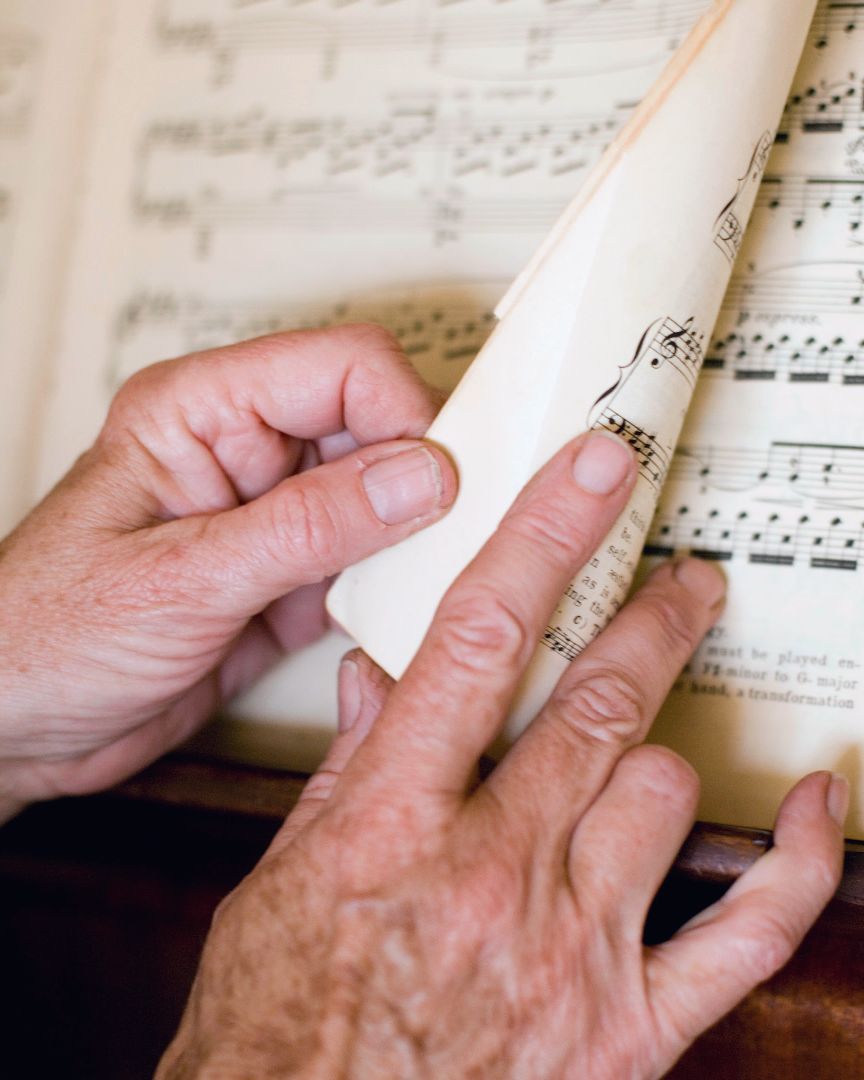
Older hands turning a page of sheet music

Parkinson’s

A steady beat can help people with Parkinson’s walk faster and take longer steps26. Singing works the same muscles used for a strong, clear voice.

Music therapy can support

  • walking, balance and getting moving
  • freezing while walking
  • voice loudness and clarity
  • mood and social connection

In a music therapy session

We might walk to music set at the right tempo, do rhythm exercises for arm movements, practise singing and voice exercises to build loudness, or sing in a group.

What the research says

A 2022 meta-analysis of 18 randomised trials found rhythmic auditory stimulation (walking to a beat) improved walking speed, stride length and motor function, and reduced freezing, in people with Parkinson’s26. ParkinSong, an Australian singing program, improved voice loudness, breath strength and voice-related quality of life27. A broader review found music interventions helped speech, communication, quality of life and movement28.

Walking shoes on a path, seen from a low angle

Every person is different, so we start with your goals, not the diagnosis. Don’t see what you’re looking for? Get in touch and we can talk it through.

Where this information comes from

Every claim on this page has a reference. It draws on peer-reviewed research, including systematic reviews and clinical trials, as well as two excellent booklets from the Australian Music Therapy Association (AMTA): Music Therapy Changes Lives and the Disability Evidence Summary 2024.

The body of evidence for music therapy keeps growing, with new studies adding to what we know all the time2. Where the research is still early, we say so.

This is general information, not medical advice. Music therapy works best as part of a team, alongside your GP and other therapists.

References

  1. Australian Music Therapy Association. Music therapy changes lives: the benefits of music therapy (booklet). austmta.org.au
  2. Australian Music Therapy Association. Music therapy: disability evidence summary 2024. austmta.org.au
  3. Geretsegger M, et al. Music therapy for autistic people. Cochrane Database of Systematic Reviews. 2022;(5):CD004381. doi.org/10.1002/14651858.CD004381.pub4
  4. Sharda M, et al. Music improves social communication and auditory–motor connectivity in children with autism. Translational Psychiatry. 2018;8:231. doi.org/10.1038/s41398-018-0287-3
  5. Kern P, Wolery M, Aldridge D. Use of songs to promote independence in morning greeting routines for young children with autism. Journal of Autism and Developmental Disorders. 2007;37(7):1264–71. doi.org/10.1007/s10803-006-0272-1
  6. Martin-Moratinos M, et al. Effects of music on attention-deficit/hyperactivity disorder (ADHD) and potential application in serious video games: systematic review. Journal of Medical Internet Research. 2023;25:e37742. doi.org/10.2196/37742
  7. Pasiali V, LaGasse AB, Penn SL. The effect of musical attention control training (MACT) on attention skills of adolescents with neurodevelopmental delays: a pilot study. Journal of Music Therapy. 2014;51(4):333–54. doi.org/10.1093/jmt/thu030
  8. Boster JB, et al. Music improves social and participation outcomes for individuals with communication disorders: a systematic review. Journal of Music Therapy. 2021;58(1):12–42. doi.org/10.1093/jmt/thaa015
  9. Vaiouli P, Andreou G. Communication and language development of young children with autism: a review of research in music. Communication Disorders Quarterly. 2018;39(2):323–9. doi.org/10.1177/1525740117705117
  10. van Tellingen M, et al. Music and musical elements in the treatment of childhood speech sound disorders: a systematic review of the literature. International Journal of Speech-Language Pathology. 2023;25(4):549–65. doi.org/10.1080/17549507.2022.2097310
  11. Moreno-García G, Monteagudo-Chiner P, Cabedo-Mas A. The role of music in the development of children with Down syndrome: a systematic review. Interdisciplinary Science Reviews. 2020;45(2):158–73. doi.org/10.1080/03080188.2020.1755556
  12. Yanagiwara S, et al. Effects of music therapy on functional ability in people with cerebral palsy: a systematic review. Journal of Rural Medicine. 2022;17(3):101–7. doi.org/10.2185/jrm.2022-014
  13. Johansson AM, Domellöf E, Rönnqvist L. Short- and long-term effects of synchronized metronome training in children with hemiplegic cerebral palsy: a two case study. Developmental Neurorehabilitation. 2012;15(2):160–9. doi.org/10.3109/17518423.2011.635608
  14. Pavlicevic M, et al. Making music, making friends: long-term music therapy with young adults with severe learning disabilities. Journal of Intellectual Disabilities. 2014;18(1):5–19. doi.org/10.1177/1744629513511354
  15. Martínez-Aldao D, et al. Feasibility of a dance and exercise with music programme on adults with intellectual disability. Journal of Intellectual Disability Research. 2019;63(6):519–27. doi.org/10.1111/jir.12585
  16. Thompson Z, Khalil-Salib L. Online music therapy groups during COVID-19: perspectives from NDIS participants and caregivers. Australian Journal of Music Therapy. 2021;32(1):53–63.
  17. Lu G, et al. Effects of music therapy on anxiety: a meta-analysis of randomized controlled trials. Psychiatry Research. 2021;304:114137. doi.org/10.1016/j.psychres.2021.114137
  18. Geipel J, et al. Music-based interventions to reduce internalizing symptoms in children and adolescents: a meta-analysis. Journal of Affective Disorders. 2018;225:647–56. pubmed.ncbi.nlm.nih.gov/28889050
  19. Hillier A, et al. Positive outcomes following participation in a music intervention for adolescents and young adults on the autism spectrum. Psychology of Music. 2012;40(2):201–15. doi.org/10.1177/0305735610386837
  20. Magee WL, Clark I, Tamplin J, Bradt J. Music interventions for acquired brain injury. Cochrane Database of Systematic Reviews. 2017;(1):CD006787. doi.org/10.1002/14651858.CD006787.pub3
  21. Siponkoski ST, et al. Music therapy enhances executive functions and prefrontal structural neuroplasticity after traumatic brain injury: evidence from a randomized controlled trial. Journal of Neurotrauma. 2020;37(4):618–34. doi.org/10.1089/neu.2019.6413
  22. Liu Q, et al. The effect of music therapy on language recovery in patients with aphasia after stroke: a systematic review and meta-analysis. Neurological Sciences. 2022;43(2):863–72. doi.org/10.1007/s10072-021-05743-9
  23. van der Steen JT, et al. Music-based therapeutic interventions for people with dementia. Cochrane Database of Systematic Reviews. 2025;(3):CD003477. doi.org/10.1002/14651858.CD003477.pub5
  24. Baker FA, et al. Clinical effectiveness of music interventions for dementia and depression in elderly care (MIDDEL): Australian cohort of an international pragmatic cluster-randomised controlled trial. The Lancet Healthy Longevity. 2022;3(3):e153–65. doi.org/10.1016/S2666-7568(22)00027-7
  25. Clark IN, Tamplin JD, Baker FA. Community-dwelling people living with dementia and their family caregivers experience enhanced relationships and feelings of well-being following therapeutic group singing. Frontiers in Psychology. 2018;9:1332. doi.org/10.3389/fpsyg.2018.01332
  26. Ye X, et al. Rhythmic auditory stimulation promotes gait recovery in Parkinson’s patients: a systematic review and meta-analysis. Frontiers in Neurology. 2022;13:940419. doi.org/10.3389/fneur.2022.940419
  27. Tamplin J, et al. ParkinSong: a controlled trial of singing-based therapy for Parkinson’s disease. Neurorehabilitation and Neural Repair. 2019;33(6):453–63. doi.org/10.1177/1545968319847948
  28. Barnish MS, Barran SM. A systematic review of active group-based dance, singing, music therapy and theatrical interventions for quality of life, functional communication, speech, motor function and cognitive status in people with Parkinson’s disease. BMC Neurology. 2020;20:371. doi.org/10.1186/s12883-020-01938-3

Is music therapy right for you?

Make a referral, or pop in for a no-pressure cuppa and a look around the clinic first.